Main Menu
- Home
- Product Finder
- Calibration Systems
- Calibration Services
- Digital Sensing
- Industrial Vibration Calibration
- Modal and Vibration Testing
- Non-Destructive Testing
- Sound & Vibration Rental Program
- Learn
- About Us
- Contact Us

Below you will find a general outline of the capabilities of common nondestructive testing (NDT) methods. This is intended as brief summary of each discipline's capabilities.
 Excellent Excellent | 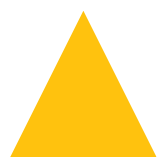 Fair Fair |  Poor Poor |
| RAM Resonant Acoustic | ET Eddy Current | MT/PT Magnetic/ Penetrant | UT Ultrasonic | RT Radiography | |
|---|---|---|---|---|---|
| Defect/Issue | |||||
| Cracks/Chips/Voids | | | | | |
| Material Properties | | | | | |
| Missed Operations | | | | | |
| Structural Integrity | | | | | |
| Product Lot Variation | | | | | |
| Defect Location | |||||
| Surface (External) | | | | | |
| Internal | | | | | |
| Brazing/Bonding/Welding | | | | | |
| Speed/Training/Cost | |||||
| Throughput | | | | | |
| Training/Certification | | | | | |
| Total Inspection Costs | | | | | |
| Automation Capacity | |||||
| Quantitative Results | | | | | |
| Ease of Automation | | | | | |
| Cost of Automation | | | | | |
| Resonant Inspection (RI) | Ultrasonic Testing (UT) | Radiography (RT) | Eddy Current (ET) |
| Liquid Penetrant (LPI / PT) | Magnetic Particle (MT / MPI) | Infrared Thermography | Visual Inspection (VT) |
Resonant Inspection is a whole-body test method which detects resonant frequency shifts resulting from changes in mass, stiffness or damping of a part. Resonance can detect defects such as cracks, voids, chips, brazing problems, nodularity, variations
in hardness, missed manufacturing processes, delamination, and more.
Applications include, but are not limited to, powder metal parts, castings, ductile iron parts, brazed assemblies, forgings, stampings and ceramic parts.
Non-Destructive Testing Resonant Acoustic Method (NDT-RAM) is a form of resonant inspection offered by The Modal Shop. NDT-RAM is available in automated, semi-automated, manual, and small-part drop-test systems. Learn more about which system is right for you.
| Advantages | Disadvantages |
|---|---|
|
|
Measures thickness, velocity or detects internal defects and variations, such as cracks, lack of fusion, delaminations and lack of bond.
Applications include wrought metals, welds, brazed joints, adhesive or bonded joints, non-metallic
materials, in-service parts.
| Advantages | Disadvantages |
|---|---|
|
|
Measures or detects, internal defects and variations, porosity, inclusions, cracks, lack of fusion, corrosion, geometry variation, density changes, misassembled and misaligned parts.
| Advantages | Disadvantages |
|---|---|
|
|
Measures or detects surface and subsurface cracks and seams, alloy content, heat treatment variations, wall and coating thickness, crack depth, conductivity and permeability.
| Advantages | Disadvantages |
|---|---|
|
|
Measures or detects defects open to the surface of parts such as cracks, porosity, seams, laps and through wall leaks.
| Advantages | Disadvantages |
|---|---|
|
|
Measures or detects surface and qualified subsurface defects, cracks, seams, porosity, inclusions, and very sensitive for locating small tight cracks.
| Advantages | Disadvantages |
|---|---|
|
|
Measures or detects hot spots, heat transfer, temperature ranges, temperature monitoring and electrical assemblies.
| Advantages | Disadvantages |
|---|---|
|
|
Measures or detects surface flaws, blemishes, missing features, and dimensional flaws.
| Advantages | Disadvantages |
|---|---|
|
|